For most of us, this beloved Middle Eastern dip comes from a plastic tub in the grocery store. It is often thick, slightly gritty, and heavily reliant on aggressive amounts of garlic and lemon juice to mask the flavor of low-quality ingredients. But when you travel to the Levant, you realize that authentic versions are an entirely different experience.
True, authentic purées are not just dips; they are silky, luxurious, and light as air. The texture is so incredibly smooth that it resembles a savory frosting more than a paste. Achieving this texture at home does not require professional equipment, but it does require a deep understanding of the two most important ingredients: the chickpea and the tahini.
Today, we are abandoning the gritty, store-bought tubs. We are going to build a masterpiece from the ground up, utilizing a crucial, often-skipped technique that guarantees absolute perfection.
The Secret to a Silky Smooth Texture
The single biggest obstacle between you and a velvety texture is the skin of the chickpea. Every individual bean is wrapped in a thin, translucent membrane. No matter how powerful your food processor or blender is, it cannot completely break down these fibrous skins. If you leave them on, your final dish will always have a slightly grainy, rough mouthfeel.
The secret is removing them. If you are using dried beans (which is highly recommended), adding a teaspoon of baking soda to the soaking water helps break down the skins, allowing them to float to the surface when boiled. If you are using high-quality canned beans for convenience, you must take the ten extra minutes to gently squeeze each bean between your thumb and index finger to slip the skin off. It is a labor of love, but the difference in the final product is staggering.
The second pillar is the tahini. Do not treat tahini as an afterthought. In authentic recipes, it makes up a massive portion of the dish. You must buy premium, pourable tahini imported from the Middle East. If your tahini is thick, chalky, and stuck to the bottom of the jar like natural peanut butter, your final dish will be bitter and heavy.
Building the Perfect Bowl
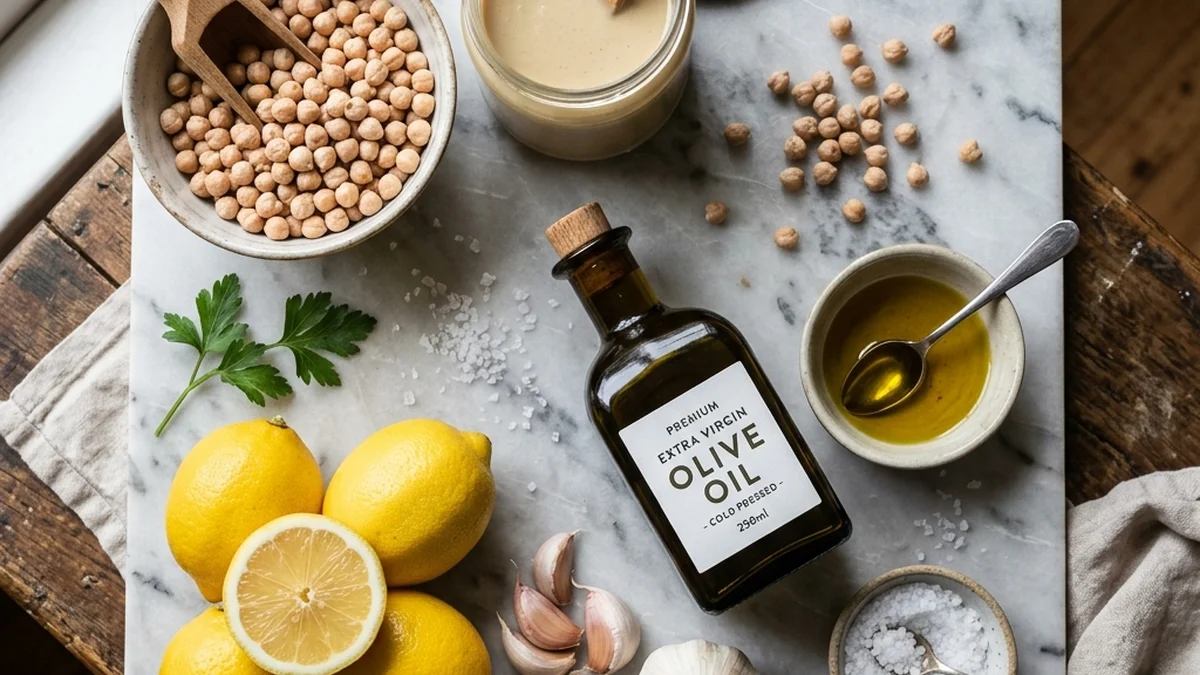
Because this recipe relies on so few ingredients, there is nowhere for poor quality to hide. Here is what you need to build the ultimate spread:
- Chickpeas: Peeled and cooked until extremely tender. If you pinch a bean, it should completely dissolve with zero resistance.
- Premium Tahini: It must be smooth, light in color, and have a rich, nutty flavor without extreme bitterness.
- Ice Cold Water: This is a crucial trick. Blending ice-cold water into the tahini causes it to emulsify into a light, fluffy, and incredibly white paste before the beans are even added.
- Fresh Lemon Juice: You must squeeze it fresh. Do not use bottled juice.
- Garlic: One or two cloves, finely minced. The garlic should support the flavor, not overpower it.
- Extra Virgin Olive Oil: Never blend the olive oil into the mixture; this can make it heavy and bitter. The oil is strictly for finishing and pooling on top.
The Emulsification Process
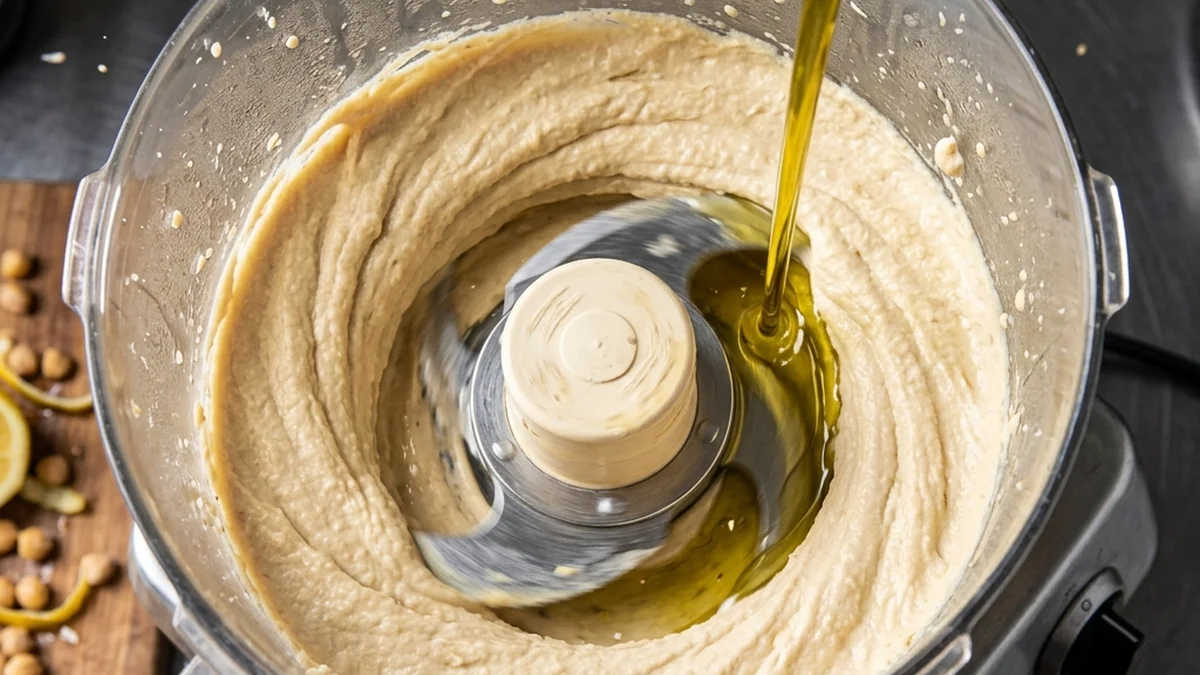
The order of operations is critical. Do not throw everything into the food processor at once. Begin by adding your premium tahini and fresh lemon juice to the food processor. Turn the machine on and let it run for a full minute. The mixture will become thick and pale. While the machine is running, slowly drizzle in a few tablespoons of ice-cold water until the tahini suddenly transforms into a fluffy, aerated cream.
Once you have achieved this fluffy base, add your minced garlic, a generous pinch of cumin, and kosher salt. Now, add your peeled, ultra-tender chickpeas. Turn the machine on and let it run. Do not pulse it a few times and call it a day. Let it run continuously for at least three to four full minutes, stopping occasionally to scrape down the sides.
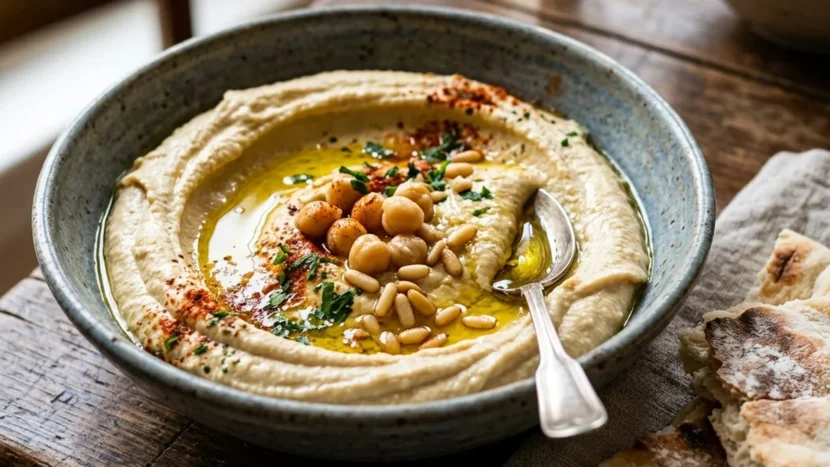
When you are finished, the texture should be impossibly smooth and light. To serve, spoon it into a wide, shallow bowl. Use the back of a spoon to create a deep, circular swoosh, leaving a well in the center. Fill that well with a generous pour of high-quality extra virgin olive oil, a sprinkle of paprika or sumac, and toasted pine nuts. Serve immediately with warm, pillowy pita bread, and follow it up with a slice of authentic Italian tiramisu.