
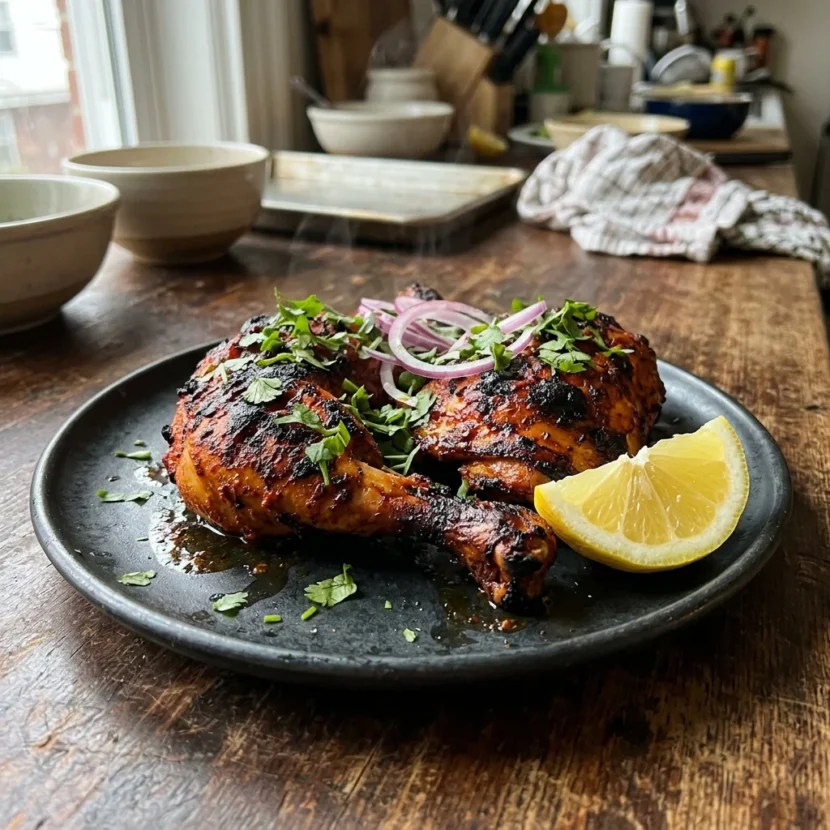
This is the tandoori chicken I spent three months perfecting — after burning batches, tweaking spice ratios, and testing every oven trick I could find. It’s smoky without a tandoor, deeply spiced without being overpowering, and so juicy that the meat practically falls off the bone.
I grew up watching tandoori chicken come out of massive clay ovens at my uncle’s restaurant in the evenings. The heat was intense — you could feel it from across the kitchen — and the chicken came out blistered, red, and glistening. For years I assumed you couldn’t replicate that at home. You can. It just takes knowing a few things most recipes skip over.
The secret isn’t one thing — it’s three. A two-step marinade (lemon-salt first, then yogurt-spice), Kashmiri chili powder instead of regular chili for that deep red without the burn, and screaming-hot oven temperature with a final broil. That’s it. No special equipment. No tandoor needed.
- Two-Step Marinade: Lemon and salt go on first to break down surface proteins so the yogurt marinade actually penetrates.
- Real Tandoori Color: Kashmiri red chili powder gives you that signature red-orange without food coloring.
- High Heat + Broiler Finish: 240°C (475°F) mimics tandoor heat. The final broil creates those charred, blistered spots.
- Thick Yogurt = Juicy Meat: Greek yogurt or hung curd coats the chicken properly and tenderizes without making things mushy.
What Is Tandoori Chicken? A Quick History
Tandoori chicken — as we know it today — was created in the 1920s in Peshawar (in present-day Pakistan) by Kundan Lal Gujral. The idea was simple but revolutionary: marinate chicken in yogurt and spices, then cook it in a tandoor — a cylindrical clay oven that reaches temperatures above 480°C (900°F).
After the Partition of India in 1947, Kundan Lal moved to Delhi and opened Moti Mahal restaurant in Daryaganj. It’s here that tandoori chicken became famous. The story goes that Prime Minister Jawaharlal Nehru loved it so much that it became a staple at state banquets.
Today, tandoori chicken is a cornerstone of North Indian and Punjabi cuisine. The one I’m sharing here is based on what I learned working in kitchens and what I’ve adjusted over dozens of home-cooked batches.
Ingredients for Tandoori Chicken
For the First Marinade (Lemon & Salt)
- 1 kg (2.2 lbs) chicken — legs, thighs, or drumsticks (bone-in, skin removed)
- 1 tablespoon lemon juice (about half a lemon)
- 1 teaspoon salt
For the Yogurt Spice Marinade
- 1 cup thick yogurt — Greek yogurt or hung curd
- 1 tablespoon ginger-garlic paste (fresh, not jarred — it matters)
- 2 teaspoons Kashmiri red chili powder
- 1 teaspoon turmeric powder
- 1 teaspoon cumin powder
- 1 teaspoon coriander powder
- 1 teaspoon garam masala
- ½ teaspoon amchur (dried mango powder) — adds tanginess
- ½ teaspoon black pepper, freshly ground
- 2 tablespoons mustard oil (or any neutral oil — but mustard oil adds authentic pungency)
- ½ teaspoon kasuri methi (dried fenugreek leaves), crushed between palms
- A pinch of red/orange food color (entirely optional)
🔄 Ingredient Substitutions
- No Kashmiri chili powder? Use 1 tsp sweet paprika + ½ tsp cayenne.
- No mustard oil? Any neutral oil works. You lose a bit of pungency, but the flavor is still solid.
- No amchur? Add an extra teaspoon of lemon juice to the yogurt marinade.
- Dairy-free? Use thick coconut cream or cashew yogurt. Add 1 tablespoon of chickpea flour to help it cling.
- No ginger-garlic paste? Grate 1-inch fresh ginger + 4 garlic cloves. Blend or mince very fine.
How to Make Homemade Tandoori Masala
You can use store-bought tandoori masala if you’re short on time. But making your own takes 10 minutes and the flavor difference is real. Freshly toasted whole spices have oils that pre-ground powders have lost months ago.
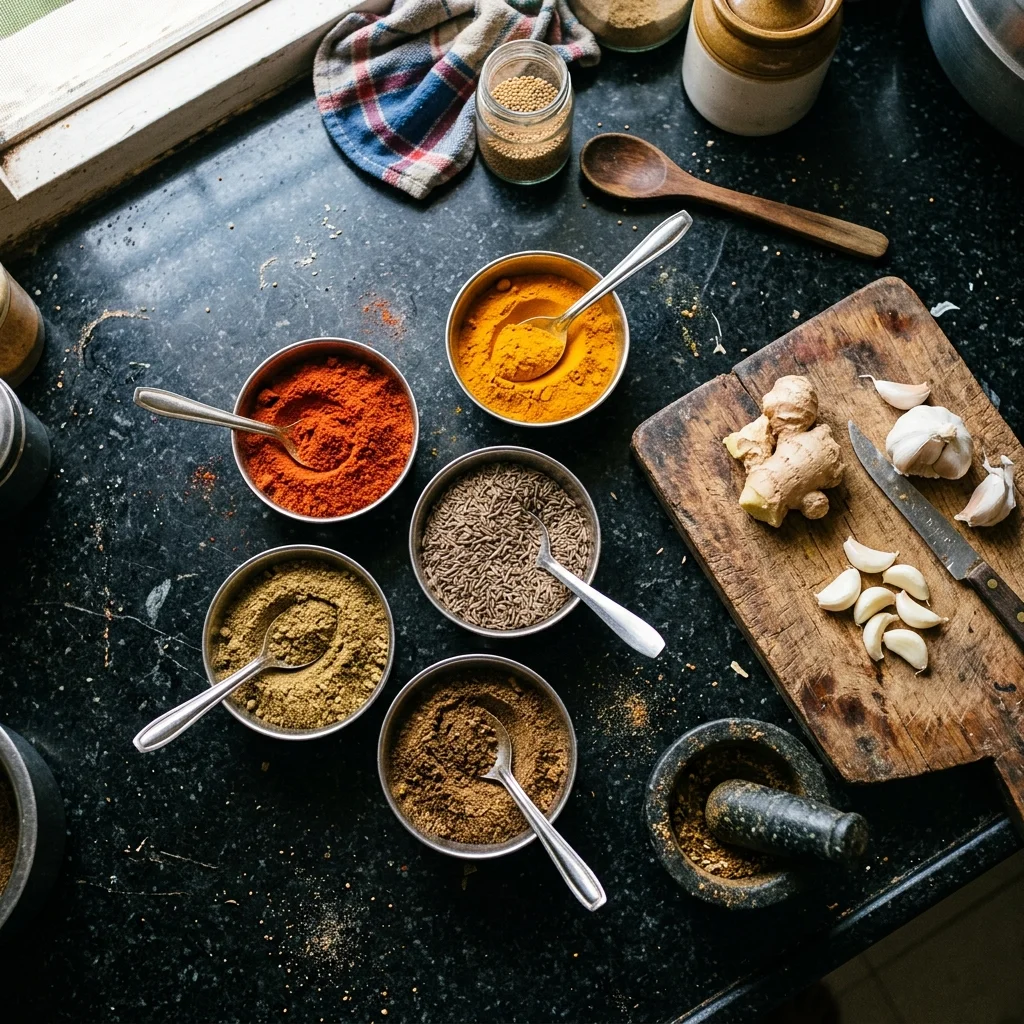
- Dry roast in a pan over medium heat until fragrant (2–3 minutes): 2 tsp cumin seeds, 2 tsp coriander seeds, 1 tsp black peppercorns, 4 cloves, 2 green cardamom pods, 1 small cinnamon stick, 1 bay leaf.
- Cool completely, then grind to a fine powder in a spice grinder.
- Mix the ground spices with: 2 tsp Kashmiri chili powder, 1 tsp turmeric, ½ tsp amchur, ½ tsp ginger powder, ½ tsp garlic powder, ½ tsp kasuri methi (crushed).
- Store in an airtight glass jar. Keeps for 3–4 months.
Use 2–3 tablespoons of this blend in place of the individual spices listed in the yogurt marinade above.
Step-by-Step Instructions
1. Prepare the Chicken
Start with 1 kg of bone-in chicken. Remove the skin (it blocks the marinade from penetrating). Make 2–3 deep diagonal slashes on each piece, cutting almost to the bone. Without them, the marinade sits on the surface and you end up with bland chicken under a tasty crust.
2. First Marinade — Lemon & Salt
Rub the chicken pieces with 1 tablespoon lemon juice and 1 teaspoon salt. Work it into the slashes. Set aside for 20–30 minutes at room temperature. The acid and salt start breaking down the surface proteins.
3. Make the Yogurt Spice Marinade
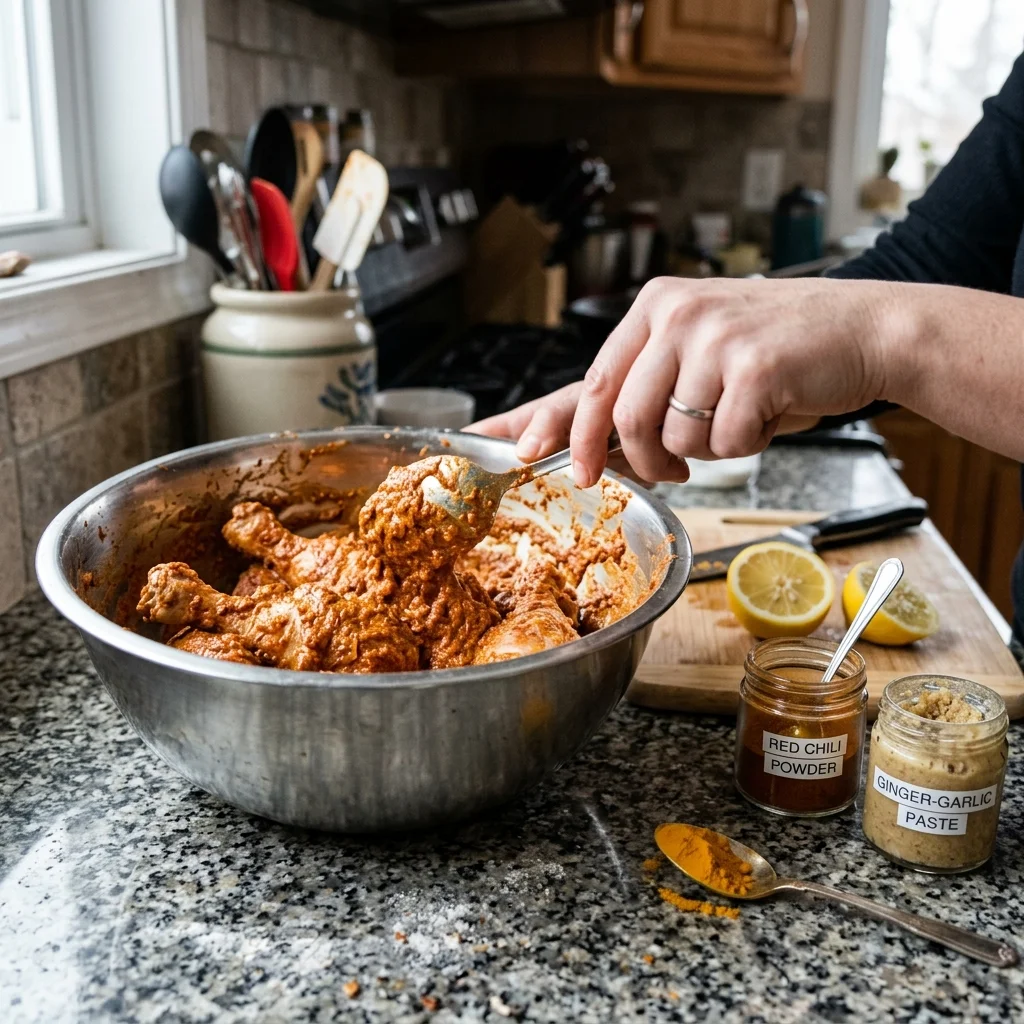
In a large bowl, mix the thick yogurt, ginger-garlic paste, all the spice powders, mustard oil, and crushed kasuri methi. Stir until it’s a smooth, uniform red-orange paste.
4. Marinate the Chicken (4–24 Hours)
Pour the marinade over the chicken. Press the paste into every slash and crevice. Cover and refrigerate for at least 4 hours. Overnight (12–24 hours) is ideal. Past 24 hours, the yogurt starts making the texture slightly mushy.
5. Cook the Tandoori Chicken
Take the chicken out of the fridge 30 minutes before cooking. Cold chicken straight from the fridge cooks unevenly.
6. Rest & Serve
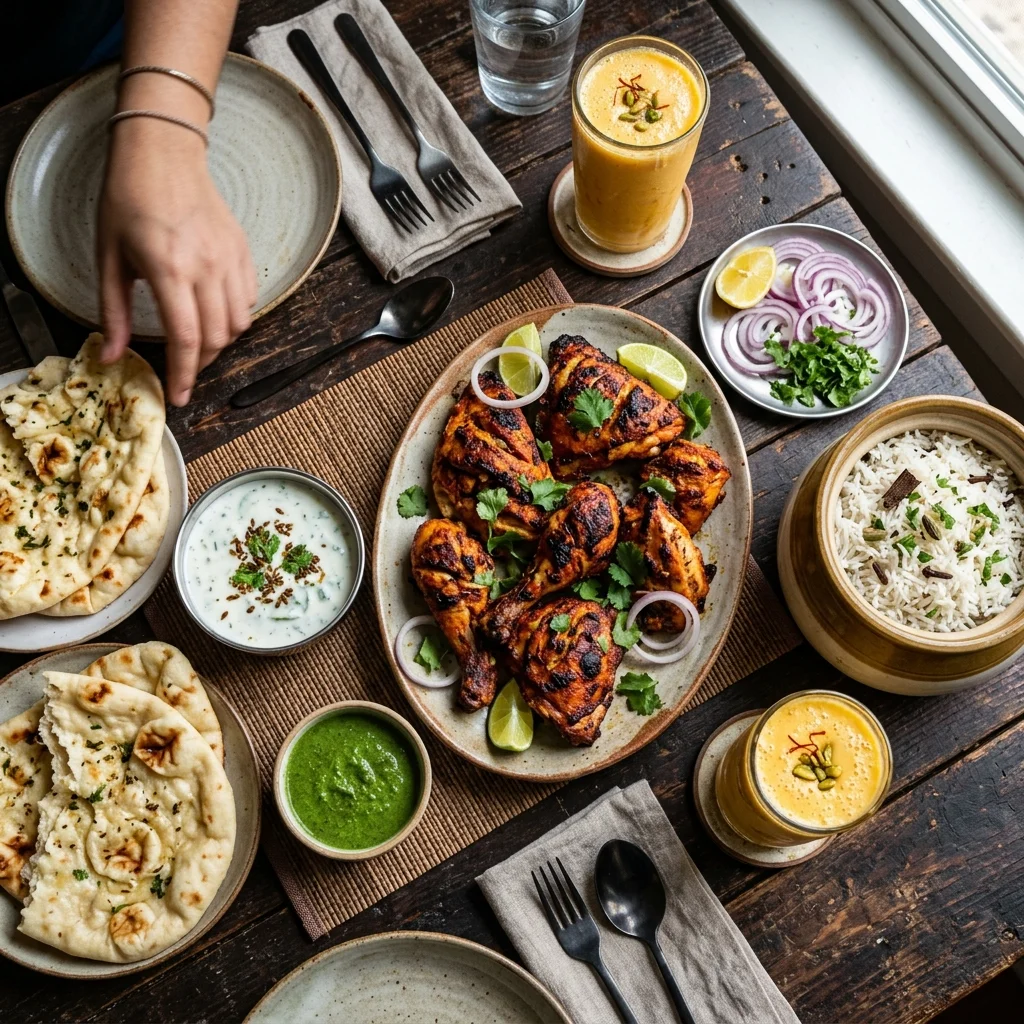
Let the chicken rest for 5 minutes after cooking. Squeeze fresh lemon juice over the top. Serve with naan, mint chutney, sliced red onion, and a wedge of lemon.
5 Ways to Cook Tandoori Chicken Without a Tandoor
🔥 Oven Method (My Go-To)
Temperature: 240°C (475°F)
Time: 25–30 minutes + 3–5 minutes under broiler.
- Preheat oven to 240°C (475°F) with the rack in the upper-middle position.
- Place marinated chicken on a wire rack set over a foil-lined baking tray.
- Bake 25–30 minutes until the edges start to char and the thickest part registers 72°C (162°F).
- Switch to broil/grill on high. Broil for 3–5 minutes until charred spots appear. The internal temp should hit 74°C (165°F).
🥩 Grill / BBQ Method
Temperature: Medium-high, around 200–230°C (400–450°F).
Time: 30–40 minutes total.
- Heat grill to medium-high. Oil the grill grates. Place chicken bone-side down first.
- Grill 15–20 minutes on the first side, flip, and grill 12–15 more minutes.
- Move to indirect heat for the last 5 minutes if the outside is charring too fast.
💨 Air Fryer Method
Temperature: 200°C (400°F).
Time: 20–25 minutes.
- Preheat air fryer to 200°C (400°F) for 3 minutes.
- Place chicken in a single layer — don’t overcrowd.
- Cook 12 minutes, flip, then cook 8–13 more minutes until internal temp reaches 74°C (165°F).
🍳 Stovetop / Cast Iron Skillet Method
Temperature: Medium-high heat.
Time: 25–35 minutes.
- Heat a cast iron skillet over medium-high heat. Add 1 tablespoon oil.
- Sear chicken 4–5 minutes per side until charred.
- Reduce heat to medium-low. Cover and cook 15–20 minutes, flipping once.
- Remove lid for the last 3 minutes to crisp up the surface.
🪵 Dhungar (Charcoal Smoking) Method
This Indian technique adds real smoky flavor without a grill or tandoor.
- Place your cooked tandoori chicken in a deep pot or Dutch oven.
- Set a small steel bowl in the center of the pot.
- Heat a small piece of natural charcoal over a gas flame until it’s red-hot and glowing.
- Carefully place the hot coal in the steel bowl. Pour ½ teaspoon ghee or oil over the coal — it’ll immediately start smoking.
- Quickly cover the pot with a tight lid. Let it smoke for 2–3 minutes. Remove the bowl.
Pro Tips for Perfect Tandoori Chicken Every Time
- Don’t skimp on the slashes. I mean deep, aggressive slashes almost to the bone. The marinade needs channels to flow into the meat.
- Thick yogurt or nothing. If your yogurt is watery, strain it. Thin yogurt runs off and pools at the bottom of the bowl.
- Room temperature before cooking. 30 minutes out of the fridge. Cold chicken + hot oven = charred outside, raw inside.
- Mustard oil matters. It gives tandoori chicken a depth that other oils don’t.
- Broil at the end, not the beginning. Bake first to cook through, then broil for char.
- Kasuri methi is the secret weapon. It’s dried fenugreek leaves. That’s what “restaurant smell” is.
What to Serve with Tandoori Chicken
- Breads: Naan (butter naan or garlic naan), roti, lachha paratha. Tear off a piece, wrap it around the chicken.
- Rice: Plain basmati rice, jeera rice, or saffron pulao.
- Raita & Chutneys: Cucumber raita (cool yogurt to balance the spice) and Mint chutney (pudina chutney).
- Salads & Sides: Kachumber salad, thinly sliced red onions soaked in lemon juice, and lemon wedges.
- Drinks: Mango lassi, masala chai, or nimbu pani (Indian lemonade).
Storage, Reheating & Meal Prep
- Refrigerator: Cooked tandoori chicken keeps in an airtight container for 3–4 days.
- Freezer: Cooked: up to 2 months. Marinated raw: up to 3 months (freeze it marinated, it continues to marinate as it thaws).
- Reheating: Oven or air fryer at 190°C (375°F) for 10–12 minutes. Avoid the microwave — it makes the chicken rubbery.
- Meal Prep: Cook a double batch. Use leftovers for tandoori chicken wraps, salads, or shred it into tandoori chicken tikka masala.
Tandoori Chicken Nutrition Facts
Per serving (based on 4 servings, using bone-in skinless chicken thighs and drumsticks):
- Calories: 247
- Protein: 29g
- Total Fat: 12g (Saturated Fat: 3.5g)
- Carbohydrates: 5g
- Sodium: 580mg
Tandoori Chicken vs Chicken Tikka — What’s the Difference?
Tandoori Chicken uses large bone-in pieces (legs, thighs, drumsticks) and is served as a main course. It takes 30-40 minutes to cook and the bone retains more moisture.
Chicken Tikka uses boneless, bite-sized cubes, cooks in 15-20 minutes, and is often served as an appetizer or as the base for Chicken Tikka Masala. “Tikka” literally means “bits” or “pieces” in Hindi/Urdu. Both share a similar yogurt-spice marinade.
Frequently Asked Questions
How long should I marinate tandoori chicken?
Minimum 4 hours, but overnight (12–24 hours) is best. The yogurt’s lactic acid tenderizes the meat slowly, and the spices need time to penetrate. Don’t go past 48 hours or the texture breaks down.
Can I make tandoori chicken without a tandoor oven?
Yes. A regular oven at 240°C (475°F) with a final broil gives excellent results. You can also use a charcoal grill, air fryer, stovetop grill pan, or the dhungar (charcoal smoking) method.
What gives tandoori chicken its red color?
The red-orange color comes from Kashmiri red chili powder combined with turmeric. Restaurants often add a pinch of food coloring, but it’s optional.
Is tandoori chicken healthy?
Yes. It is high in protein, low in carbs, and cooked without deep frying. Using skinless chicken and yogurt-based marinade makes it a healthier Indian chicken preparation.
Why is my tandoori chicken dry?
Common reasons: not marinating long enough, cooking at too low a temperature, overcooking past 74°C (165°F) internal temperature, or using thin yogurt that didn’t coat properly.
Can I use chicken breast for tandoori?
You can, but expect drier results since breast is leaner. Cut into thick pieces, marinate overnight, reduce cooking time by 5–8 minutes, and check temperature early.