Meatloaf is the undisputed king of nostalgic comfort food. But let’s face the hard truth: for many of us, the meatloaf we grew up with was a dry, dense, ketchup-smothered brick. If that is your association with this classic dish, prepare to have your mind completely changed.
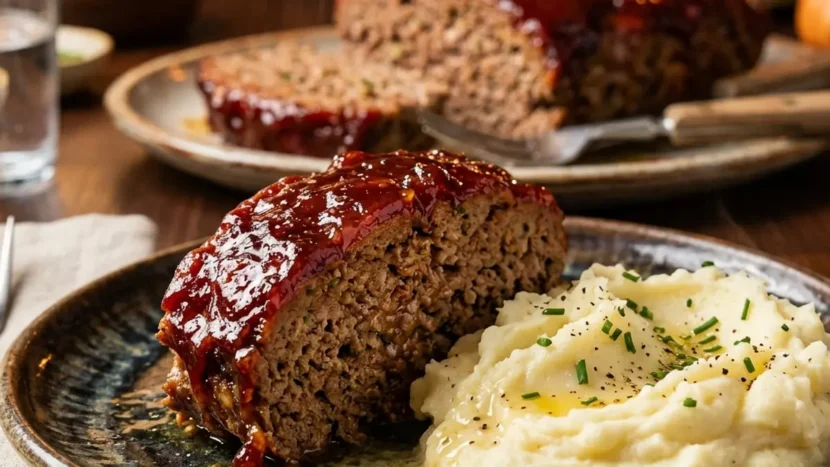
When executed properly, a great meatloaf recipe produces a incredibly juicy, deeply flavorful main course that slices beautifully and melts in your mouth. Whether you are meal prepping for the week or looking for one of the most Ridiculously Easy Dinner Ideas for Busy Weeknights, this foolproof recipe is guaranteed to become a permanent fixture in your dinner rotation.

The Anatomy of the Perfect Meatloaf Recipe
To achieve a tender, juicy loaf instead of a dry brick, you need to understand the science behind the ingredients.
1. The Meat: 80/20 is Mandatory
Do not use extra-lean ground beef for meatloaf. Fat equals moisture and flavor. You absolutely need to use 80/20 ground beef. The 20% fat content ensures the loaf remains incredibly juicy while baking in the oven. If you use 90% or 95% lean beef, your meatloaf will dry out before it even finishes cooking.
2. The Panade (The Moisture Secret)
The absolute biggest secret to the best meatloaf recipe is using a “panade”—a mixture of breadcrumbs and milk. Soaking the breadcrumbs in milk before mixing them into the meat creates a starchy paste. This paste coats the meat proteins and prevents them from shrinking and squeezing out moisture as they cook. It is the ultimate insurance policy for a tender loaf.
3. Gentle Mixing
Just like when baking muffins or cookies, you must not overmix the meat. Overworking ground beef causes the proteins to bind tightly, resulting in a tough, rubbery texture. Use your hands to gently fold the ingredients together just until they are evenly distributed, and then stop immediately.
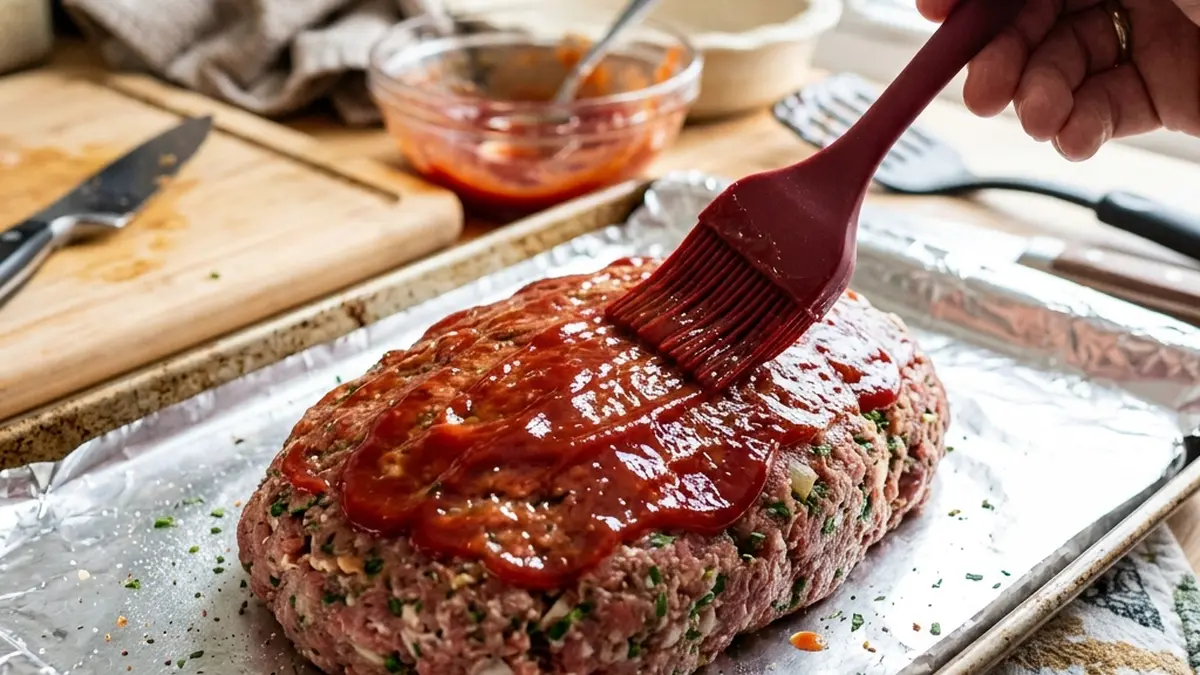
The Ultimate Sweet and Tangy Glaze
Ketchup alone is fine, but a proper glaze elevates the dish to restaurant quality. Our glaze combines ketchup with brown sugar for caramelization, and a splash of apple cider vinegar for a bright, tangy contrast that cuts through the richness of the beef.
Step-by-Step Classic Meatloaf Recipe
Preheat your oven and grab a large mixing bowl!
Ingredients for the Loaf:
- 1 ½ lbs 80/20 ground beef
- ¾ cup panko breadcrumbs
- ⅓ cup whole milk
- 1 medium yellow onion, finely grated
- 2 large eggs, lightly beaten
- 2 cloves garlic, minced
- 1 tablespoon Worcestershire sauce
- 1 teaspoon kosher salt
- ½ teaspoon freshly cracked black pepper
- 1 teaspoon dried Italian seasoning
Ingredients for the Glaze:
- ½ cup ketchup
- 2 tablespoons light brown sugar
- 1 tablespoon apple cider vinegar
- 1 teaspoon garlic powder
Instructions:
- Prep: Preheat your oven to 375°F (190°C). Line a rimmed baking sheet with aluminum foil and spray it lightly with non-stick spray (do not use a loaf pan; baking it free-form on a sheet allows the edges to caramelize!).
- Make the Panade: In a large mixing bowl, combine the panko breadcrumbs and the milk. Let it sit for 5 minutes so the breadcrumbs absorb all the liquid and become a paste.
- Mix the Loaf: To the panade, add the grated onion, beaten eggs, minced garlic, Worcestershire sauce, salt, pepper, and Italian seasoning. Stir this mixture together.
- Add the Beef: Add the ground beef to the bowl. Using your hands, gently fold and mix the meat into the wet ingredients just until combined.
- Shape the Loaf: Turn the meat mixture out onto your prepared baking sheet. Using your hands, shape it into a neat 9×5-inch loaf.
- Make the Glaze: In a small bowl, whisk together the ketchup, brown sugar, apple cider vinegar, and garlic powder. Brush half of this glaze generously over the top and sides of the meatloaf.
- Bake: Bake for 45 minutes. Remove the meatloaf from the oven and brush the remaining glaze over the top. Return it to the oven and bake for another 10 to 15 minutes, or until the internal temperature reaches 160°F (71°C) on a meat thermometer.
- Rest: This is crucial! Let the meatloaf rest on the baking sheet for 10 minutes before slicing. This allows the juices to redistribute so they don’t run out all over the cutting board.