I know what you’re thinking. “Do we really need another lasagna recipe on the internet?” The answer is a resounding, unapologetic yes. But let me stop you right there before you start pulling out flour and butter for a traditional béchamel sauce. We aren’t doing that today. Today, we are talking about the thick, creamy, ridiculously rich whole milk ricotta lasagna that I grew up eating. The kind that stands tall on your plate without turning into a puddle of soupy noodles.
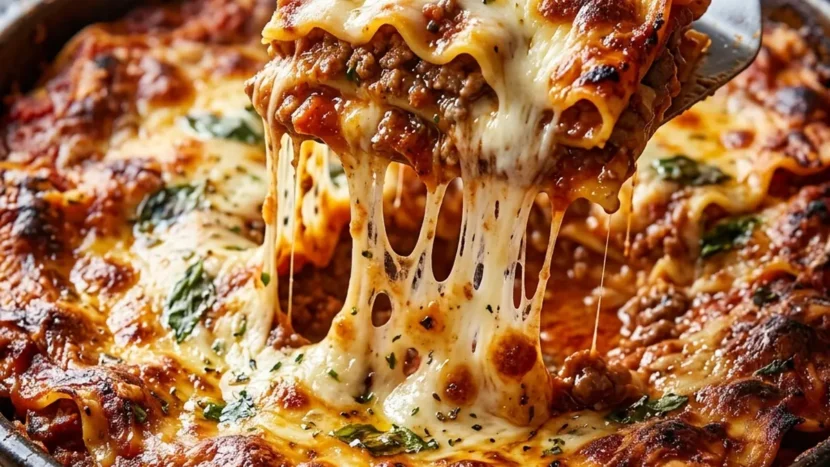
Listen, I have nothing against an authentic Northern Italian béchamel. It’s elegant and it’s beautiful. But when it’s a random Tuesday evening, or when you have fourteen hungry family members staring at you on a Sunday afternoon, you don’t have time to stand over the stove whisking flour and butter praying it doesn’t break. You want comfort. You want those beautifully browned, slightly crispy edges of pasta, or going the traditional route with an authentic carbonara. And most importantly? You want that massive, unbelievable, slow-motion cheese pull when you lift the first slice out of the pan.
This isn’t just a meal; it’s an event. And after years of tweaking ratios, adjusting bake times, and experimenting with different cheeses, I can confidently tell you that this is it. This is the only one you’re going to need.
Why This is the Ultimate Lasagna Recipe
Let’s talk about the architecture of a great lasagna. It’s all about structure. Have you ever cut into a pan, only for the layers to slide right off each other like tectonic plates in an earthquake? It’s heartbreaking. The secret to preventing the “lasagna slide” comes down to three crucial elements: the sauce reduction, the cheese binder, and the resting time.
First, the meat sauce (our ragù). We are using a blend of ground beef and mild Italian sausage. The sausage provides that essential fennel and garlic backbone that ground beef alone just can’t deliver. But here’s the trick: you have to let the sauce simmer down until it’s thick. If your sauce looks watery in the pot, it’s going to be watery in the pan.
Second, the ricotta mixture. If you use skim milk ricotta, I will personally come to your kitchen and confiscate your baking dish. You need whole milk ricotta. The fat content is non-negotiable for texture. We bind it with an egg, a mountain of freshly grated parmesan, and a handful of fresh parsley. This creates a sturdy, flavorful cement that holds the layers together.
Finally, the rest. You have to let it sit after it comes out of the oven. I know the smell is intoxicating and you want to dive in immediately, but if you cut it right away, it will collapse. Give it at least 20 to 30 minutes to set up. I promise you, it will still be piping hot on the inside.
Essential Ingredients for this Lasagna Recipe
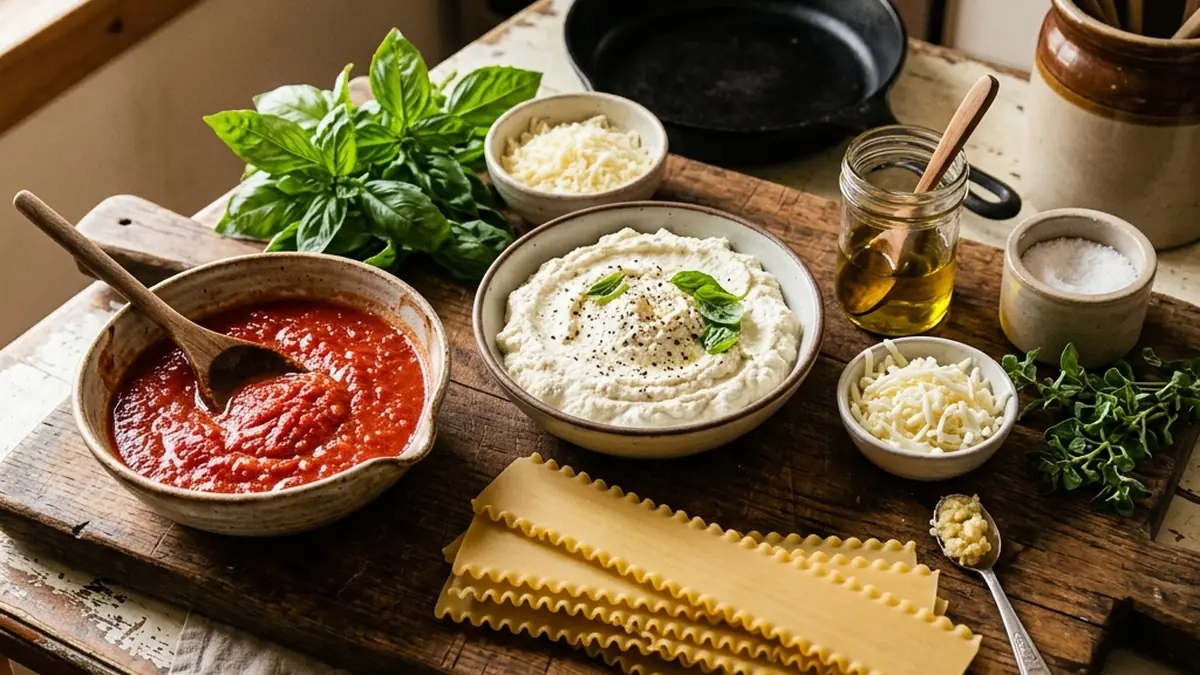
The beauty of this dish is that the ingredients are accessible. You don’t need to hunt down obscure imported cheeses, but you do need to buy the right versions of what’s at your local grocery store.
- The Meat: A 50/50 split of 80/20 ground beef and ground mild Italian sausage (casings removed).
- The Sauce: Two cans of high-quality crushed tomatoes (San Marzano if you can find them), a heavy pour of olive oil, fresh garlic, and sweet yellow onions.
- The Cheese: Whole milk ricotta, low-moisture whole milk mozzarella (do not buy the pre-shredded stuff in the bag—grate it yourself for maximum melt!), and a wedge of Parmigiano-Reggiano.
- The Noodles: Traditional dried curly-edged lasagna noodles. Forget the “no-boil” or “oven-ready” sheets. They absorb too much moisture from the sauce and leave you with a dry casserole. We are going to quickly par-boil the classic noodles.
- The Herbs: Fresh basil for the sauce, and fresh parsley for the ricotta layer.
The Assembly Process (Building the Masterpiece)
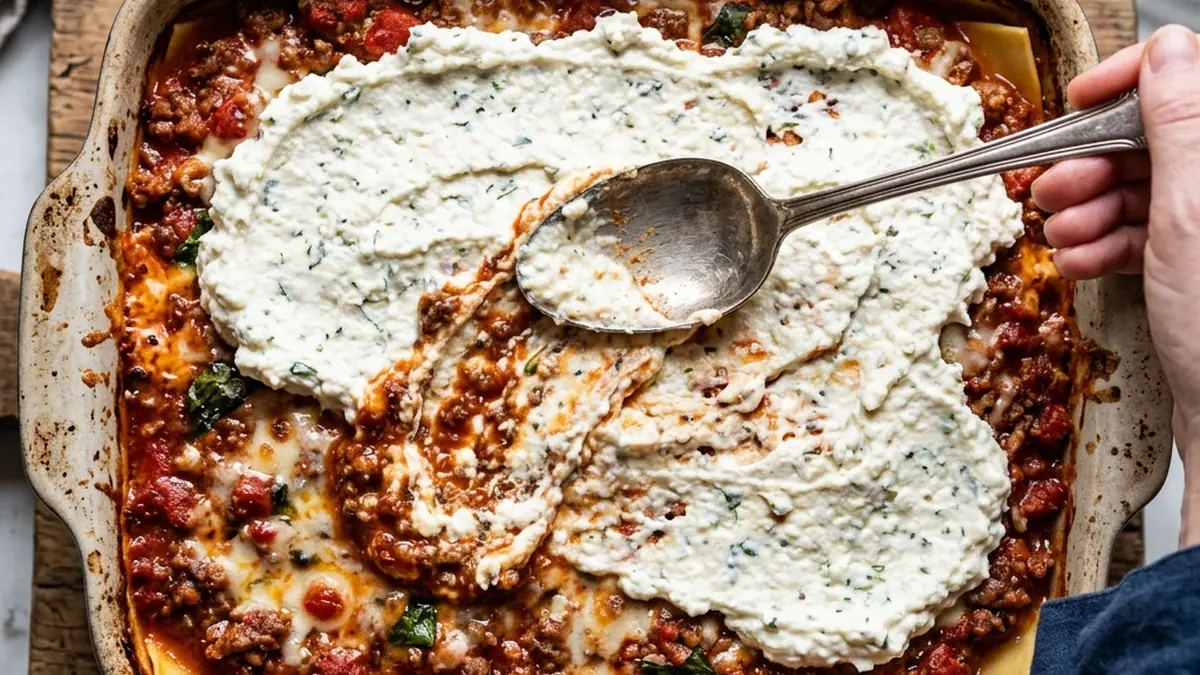
Building the layers is incredibly therapeutic. You want an even distribution so that every single bite contains a perfect ratio of pasta, meat, and cheese.
Always start with a thin layer of meat sauce directly on the bottom of a 9×13 inch baking dish. This prevents the bottom layer of noodles from sticking and burning. Then, lay down your first layer of slightly overlapping noodles.
Next comes the ricotta. Use a spoon to dollop it across the noodles, then gently spread it out. It doesn’t have to be perfectly smooth; the heat of the oven will help distribute it. Top the ricotta with a generous handful of your freshly grated mozzarella, and then a hearty ladle of the meat sauce.
Repeat this process until you reach the top of the dish. Your final layer should be noodles, a very thin coating of sauce (just enough to keep the pasta from drying out), and a massive blanket of the remaining mozzarella and parmesan cheese.
Baking for the Perfect Cheese Pull
The bake happens in two stages. First, we cover it tightly with aluminum foil. To prevent the cheese from sticking to the foil, you can either spray the underside of the foil with a little non-stick spray, or insert a few toothpicks into the top of the lasagna to act as tent poles.
Bake it covered at 375°F (190°C) for about 45 minutes. This traps the steam, ensuring the pasta finishes cooking and all the layers meld together into a single, cohesive unit.
Then, the grand finale: remove the foil and let it bake uncovered for another 15 to 20 minutes. This is where the magic happens. The edges of the pasta will curl up and get crispy. The mozzarella will bubble, blister, and turn a beautiful golden brown. If you want it even darker, you can hit it with the broiler for 60 seconds right at the very end—just don’t walk away from the oven!
Once you pull it out, remember the golden rule: let it rest. When you finally cut that first square and lift it out with your spatula, you’ll be rewarded with a towering slice of perfection and a cheese pull that belongs in a commercial.
Grab a glass of red wine, gather around the table, and enjoy. This is Sunday dinner at its absolute finest.