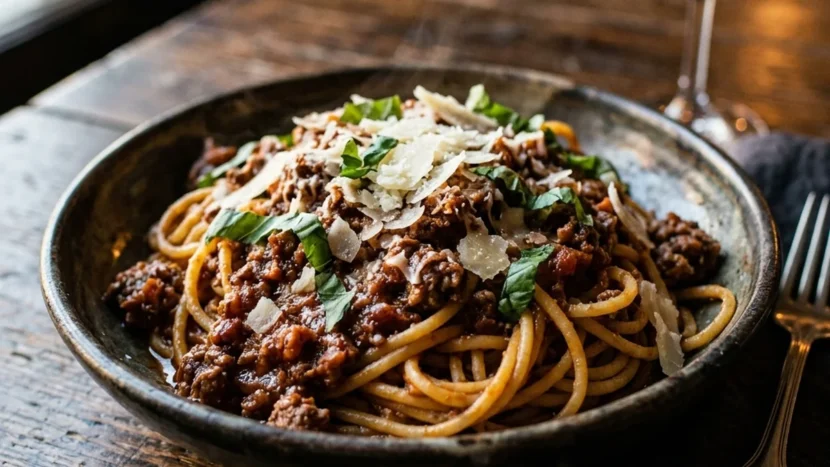
There are countless variations of meat sauce, but an authentic Italian Spaghetti Bolognese (or Ragù alla Bolognese) is in a league of its own. It is not simply ground beef swimming in marinara. Instead, it is a rich, thick, and complex meat sauce that is patiently simmered for hours, building layers of savory depth that you just cannot rush.
This recipe honors the traditional techniques from Bologna, Italy. By utilizing a foundational soffritto, combining beef and pork, and incorporating a surprising but essential ingredient—whole milk—you will achieve a ragù that clings perfectly to your pasta and melts in your mouth.
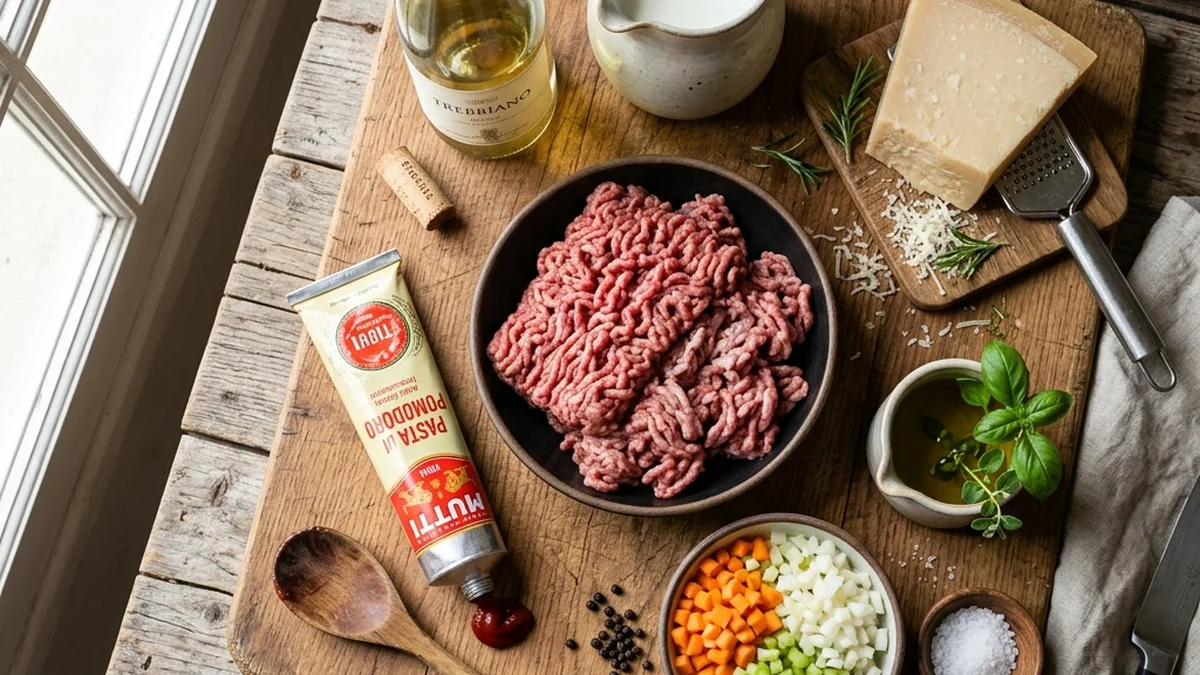
What Makes Authentic Bolognese Different?
Many home cooks mistakenly believe that Bolognese is just a tomato sauce with ground meat. In reality, authentic Bolognese is a meat sauce with just a hint of tomato. The liquid comes primarily from wine, milk, and the meat’s own juices, gently reducing over low heat until the sauce becomes impossibly tender and cohesive.
The Secret Ingredients for Depth
To achieve that signature richness, we rely on a few crucial elements:
- The Mirepoix (Soffritto): Finely diced onions, celery, and carrots form the aromatic base. They must be sautéed slowly until they practically melt into the oil.
- The Meat Blend: Using a combination of ground beef (for robust flavor) and ground pork (for sweetness and fat) creates a far superior texture than beef alone.
- Whole Milk: Adding milk before the wine or tomatoes might seem strange, but it is a vital authentic step. The milk tenderizes the meat and adds a delicate sweetness that balances the acidity of the wine and tomatoes.
- Time: A true ragù cannot be rushed. It must simmer on the lowest possible heat for at least two to three hours.
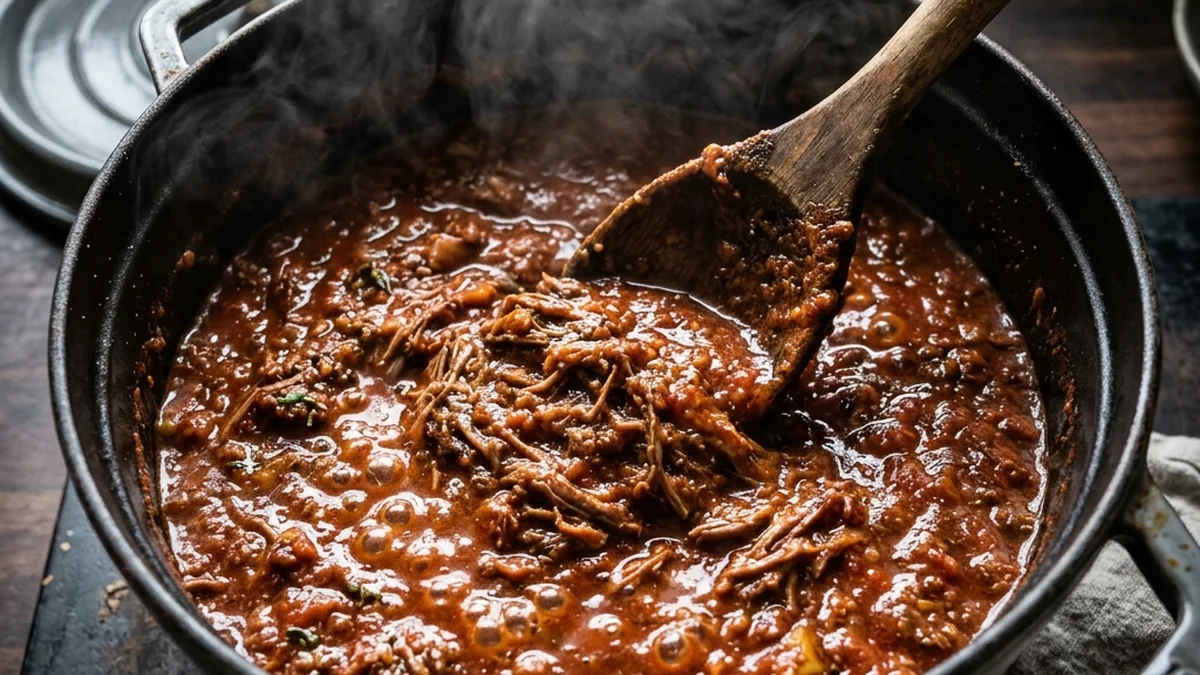
How to Make Authentic Spaghetti Bolognese
While the cooking time is long, the actual active preparation is surprisingly straightforward. Here is exactly how to build this incredible sauce.
1. Prepare the Soffritto
Heat olive oil and a small knob of butter in a heavy-bottomed Dutch oven over medium heat. Add your finely diced onions, carrots, and celery. Sauté this mixture slowly for about 10-15 minutes until the vegetables are very soft and translucent. Do not let them brown.
2. Brown the Meat
Add the ground beef and ground pork to the pot. Break the meat apart with a wooden spoon as it cooks. You want it to brown evenly and lose its pink color. Once browned, season generously with salt and freshly cracked black pepper.
3. Add Milk and Wine
Pour in the whole milk. Let it simmer gently until the milk has completely bubbled away and absorbed into the meat (about 10 minutes). Once the milk is gone, pour in the dry white wine (yes, white wine is traditional in Bologna, though red can be used) and let it simmer until it also evaporates completely.
4. Incorporate the Tomatoes
Stir in a concentrated amount of tomato paste. Unlike American meat sauces, we do not use large cans of crushed tomatoes. A high-quality tomato paste provides the perfect amount of sweetness and acidity without turning the ragù into a soup.
5. The Long Simmer
Reduce the heat to the absolute lowest setting. Cover the pot with the lid slightly ajar, and let the ragù simmer for at least 2 to 3 hours. Check it occasionally and add a splash of water or beef broth if it begins to look too dry. The final sauce should be thick, rich, and cohesive.
Looking for a lighter pasta option? Try our Authentic Silky Smooth Hummus as a starter, or finish your meal with a classic slice of Crack-Free New York Cheesecake.
Serving and Storage Suggestions
When the Bolognese is ready, do not simply spoon it over naked pasta. Instead, add your cooked spaghetti (or traditionally, wide tagliatelle ribbons) directly into a pan with a few ladles of the hot ragù. Toss them vigorously over medium heat for one minute with a splash of pasta water until the noodles are completely coated and glossy.
Serve immediately with a generous grating of fresh Parmigiano-Reggiano.
This sauce is even better the next day! Store leftovers in an airtight container in the refrigerator for up to 4 days, or freeze the sauce in portions for up to 3 months for an easy, incredibly satisfying weeknight dinner.