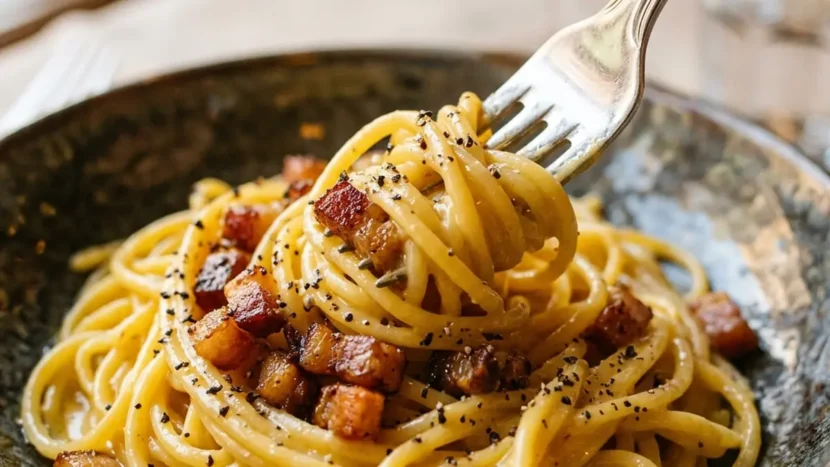
We need to talk about what is happening to Italian food in kitchens across the country. More specifically, we need to talk about a very specific, beautiful Roman pasta dish that has been bastardized with heavy cream, green peas, and cheap bacon. It breaks my heart every time I see it.
If you’ve been pouring a pint of double cream over your spaghetti and calling it an authentic Italian meal, it’s time to stop. We are going back to the absolute basics today. True, authentic Roman pasta requires only four ingredients, heat, and technique. That’s it.
When you strip away all the unnecessary additions, what you are left with is a masterclass in culinary emulsion. It’s salty, intensely savory, unapologetically rich, and surprisingly delicate. If you master this one dish, you will never order it at a restaurant again because the homemade version is just that superior.
Why This Authentic Carbonara Will Change Your Life
The magic of this dish lies entirely in the sauce, which is essentially a savory custard. When you combine raw eggs, heavily aged sheep’s milk cheese, and hot pasta water, something incredible happens. Vigorously tossing them together creates a glossy, silky emulsion that coats every single strand of spaghetti.
There is absolutely no need for heavy cream. Cream makes the dish heavy, muted, and thick in all the wrong ways. An authentic emulsion relies on the starches from the pasta water binding with the fat from the pork and the proteins in the egg yolks. It’s a delicate balancing act, but when you nail the temperature, the resulting texture is luxurious without being heavy.
The other crucial element is the pork. If you want this to taste like the trattorias in Rome, you cannot use breakfast bacon. Bacon is smoked. Authentic Roman pasta is never smoked. You need cured pork. The deep, funky, slightly sweet flavor of traditional cured pork cheek is what gives this dish its soul.
The Four Essential Ingredients for Carbonara
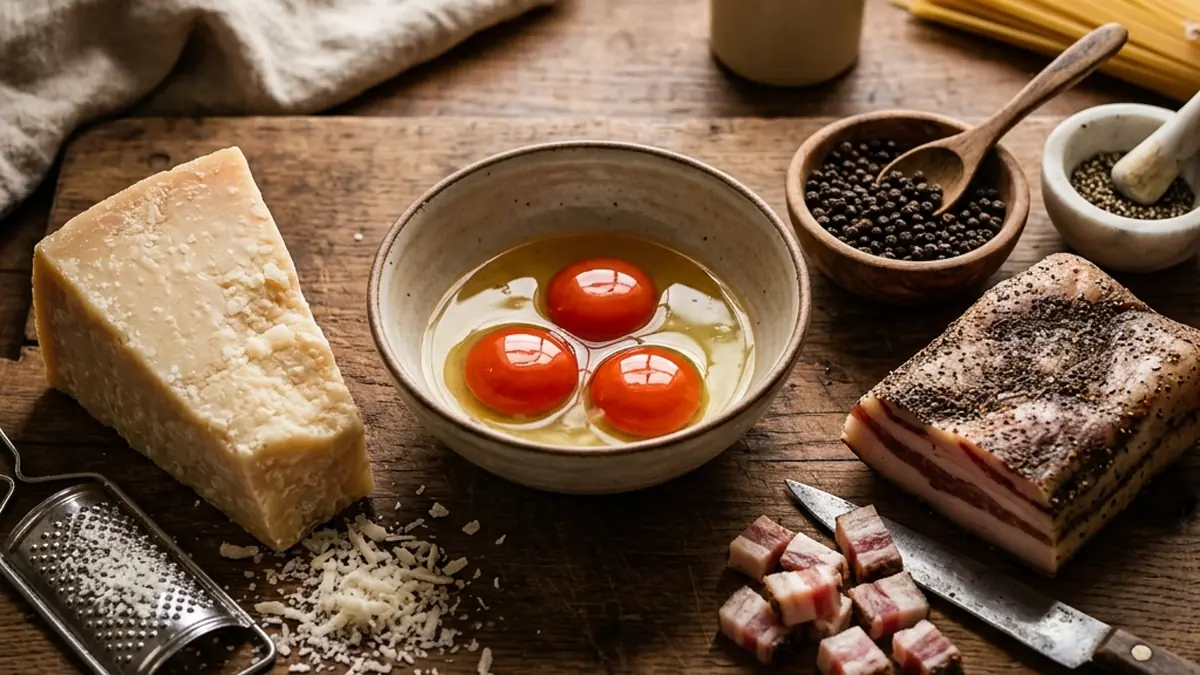
Because there is nowhere to hide in a recipe this simple, ingredient quality is everything. Put down the green can of pre-grated cheese and head to the deli counter.
- The Pork (Guanciale): This is cured pork jowl (cheek). It has an incredibly high fat-to-meat ratio. When you slowly render it in a cold pan, it releases a liquid gold fat that becomes the base of our sauce. If you absolutely cannot find guanciale, thick-cut unsmoked pancetta is a passable substitute, but guanciale is the goal.
- The Cheese (Pecorino Romano): This is a hard, salty Italian cheese made from sheep’s milk. It is sharper and saltier than Parmigiano-Reggiano. You must grate it fresh on the finest setting of your grater so it melts instantly into the eggs.
- The Eggs: We are using mostly egg yolks for intense richness, with just one whole egg to provide enough moisture to create the sauce. Use the highest quality, freshest eggs you can afford—the yolk color directly impacts the final color of your pasta.
- The Pepper: It must be freshly cracked black pepper. Pre-ground pepper tastes like dust. You want coarse, spicy chunks of black pepper to cut through the richness of the egg yolks and cheese.
The Emulsification Technique (Don’t Scramble the Eggs!)
The technique is where most people get intimidated. The fear of ending up with scrambled eggs and spaghetti is real, but easily avoided if you follow one cardinal rule: never combine the eggs and the pan over direct heat.
Start by slicing your guanciale into thick strips and placing them in a cold skillet. Turn the heat to medium-low. We want to slowly melt the fat out of the pork without burning the meat. Once the guanciale is crispy and the pan is filled with rendered fat, remove the pork pieces and turn the heat off completely.
In a bowl, vigorously whisk your egg yolks, the whole egg, and a mountain of freshly grated Pecorino Romano until it forms a thick paste. Boil your spaghetti in generously salted water until it is very al dente—it will finish cooking in the pan.
Bringing the Dish Together
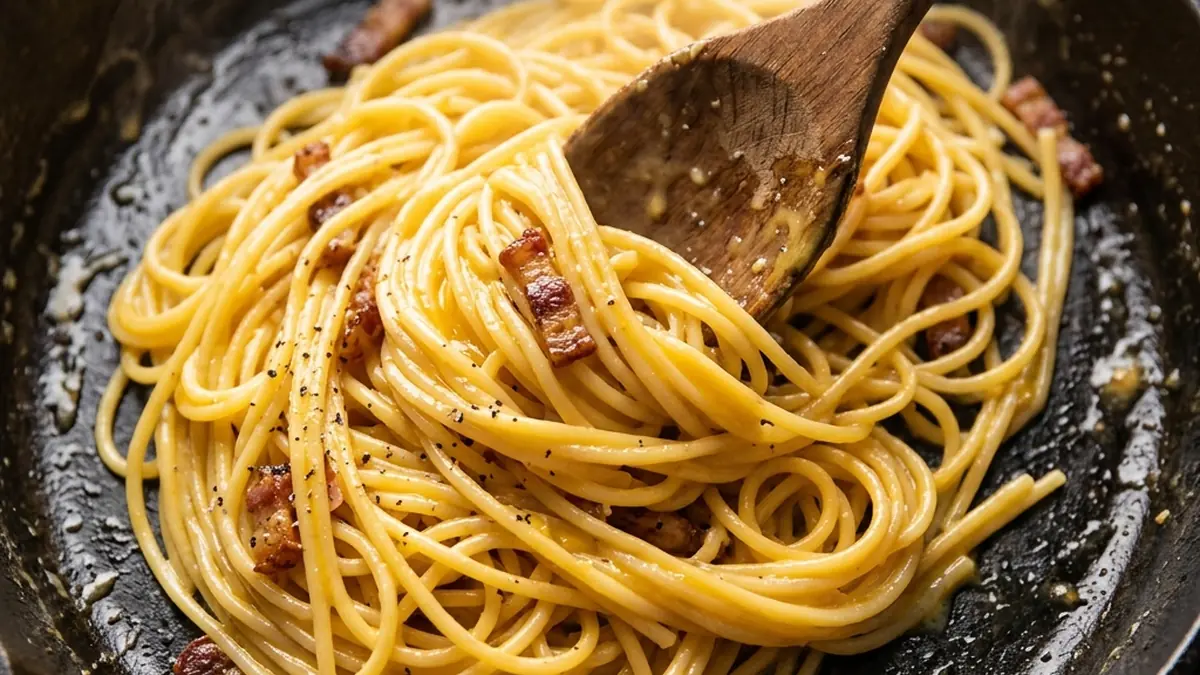
Using tongs, drag the hot pasta directly from the boiling water into the skillet with the rendered pork fat. The water clinging to the noodles will instantly emulsify with the fat. Toss aggressively for about 30 seconds to let the pan cool down slightly. This is the secret to avoiding scrambled eggs.
Now, the most important step: pour your egg and cheese paste over the pasta. Add a splash of starchy pasta water. Toss furiously. Do not stop moving the pan or the tongs. As you toss, the residual heat from the pasta and the pan will gently cook the eggs, melting the cheese into a perfectly smooth, glossy sauce.
If the sauce looks too thick or sticky, add another splash of pasta water. If it looks too thin, just keep tossing—it will tighten up as it cools. Once you have a beautiful, silky coating, toss the crispy guanciale back into the pan.
Serve immediately in warm bowls, hit it with another heavy shower of cracked black pepper and a final dusting of Pecorino. Dive in before it cools. This is Italian perfection in its purest form.
Finish off this classic Roman pasta with a slice of our Crack-Free New York Cheesecake.