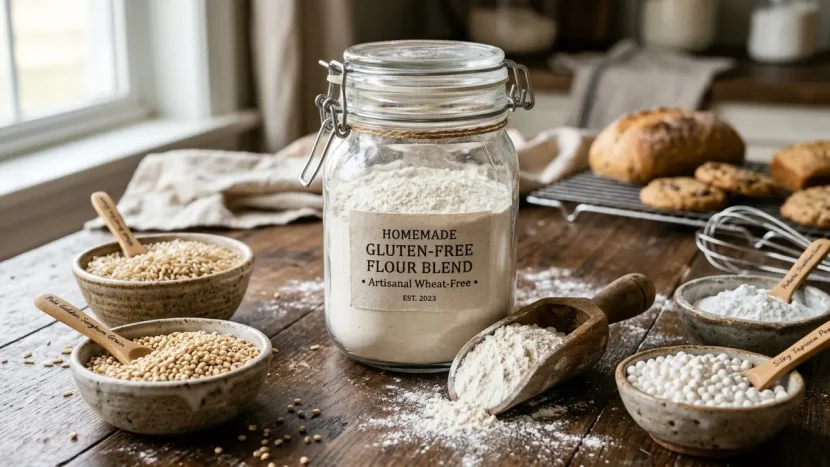
Walk down the baking aisle of any supermarket and you will see dozens of bags promising to be a “measure-for-measure” substitute for wheat flour—often priced at eight to twelve dollars for a small bag. Yet if you have ever baked chocolate chip cookies that spread into greasy puddles, cakes that tasted gritty like beach sand, or muffins with a strange metallic aftertaste (courtesy of cheap bean flours), you already know that commercial bags rarely deliver on their promise. Mixing your own homemade gluten free flour blend takes less than five minutes, costs half as much as store-bought bags, and gives you bakery-caliber texture every single time.
The secret to an all-purpose wheat-free flour blend isn’t finding a single “magic” grain. Because no single gluten-free grain possesses the exact protein-to-starch ratio of wheat endosperm, professional gluten-free pastry chefs rely on the 60/40 Whole-Grain-to-Starch Golden Ratio. Below, I break down the exact gram weights, cup measurements, and culinary science behind our master blend so you can keep a big glass canister in your pantry ready for anything.
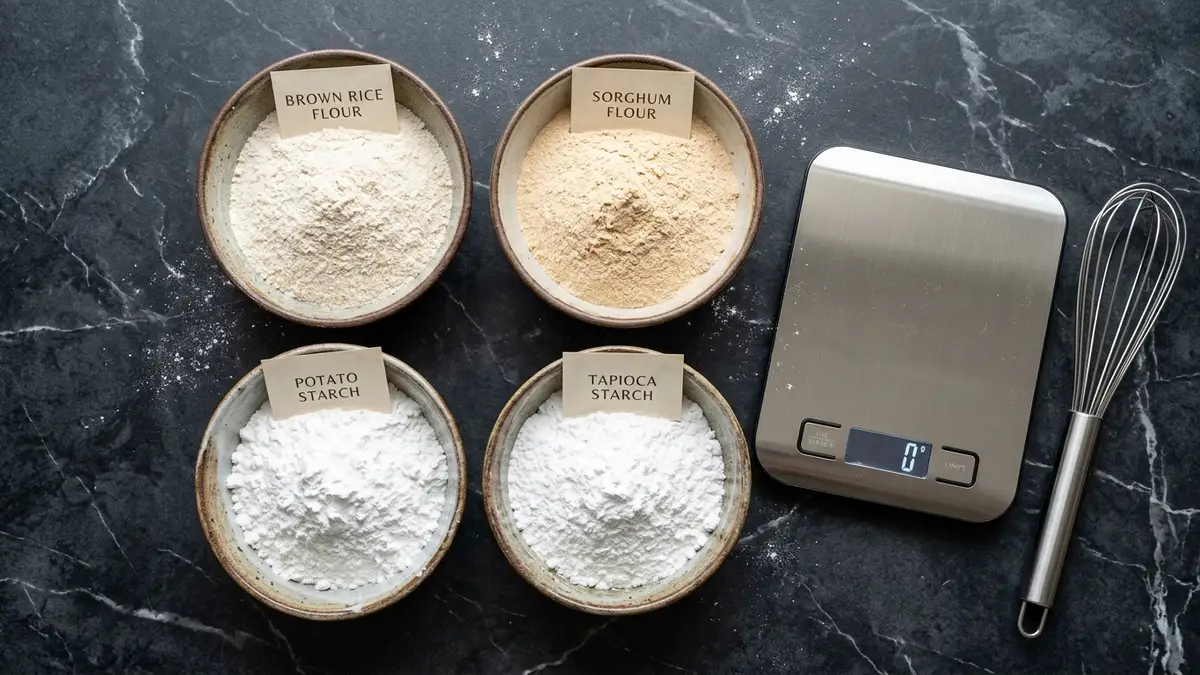
Why the 60/40 Ratio Makes the Best Gluten Free Flour Blend
Standard all-purpose wheat flour consists of roughly 10–12% protein (gluten) and 70–75% starch. When you bake with 100% brown rice flour alone, your baked goods turn out dry, crumbly, and gritty. Conversely, if you bake with too much tapioca or cornstarch, your cake turns gummy and chewy like mochi.
The 3 Functional Components of Our Homemade Gluten Free Flour Blend
To construct a balanced gluten free flour blend that swaps 1:1 by weight (or cup-for-cup) into your favorite cookies, cakes, pancakes, muffins, and quick breads, we combine three distinct flour profiles:
- 40% Superfine Brown Rice Flour (or White Rice Flour): Acts as the neutral structural foundation. Always look for “superfine” or Asian-milled rice flour rather than coarse stone-ground rice flour—when rubbed between your fingertips, it should feel silky like talcum powder, never sandy!
- 20% Sweet White Sorghum Flour (or Millet Flour): This is the secret weapon that store-bought blends skip to save money. Sorghum flour has a mild, buttery, wheat-like sweetness and 11% natural protein, eliminating the hollow “rice flour taste” and giving cookies and cakes a golden, tender crumb.
- 40% Dual Starches (25% Tapioca Starch + 15% Potato Starch): Combining two tuber starches provides superior structure compared to using cornstarch alone. Tapioca starch promotes crisp edges, stretch, and browning, while potato starch absorbs liquid efficiently and keeps baked goods soft for days.
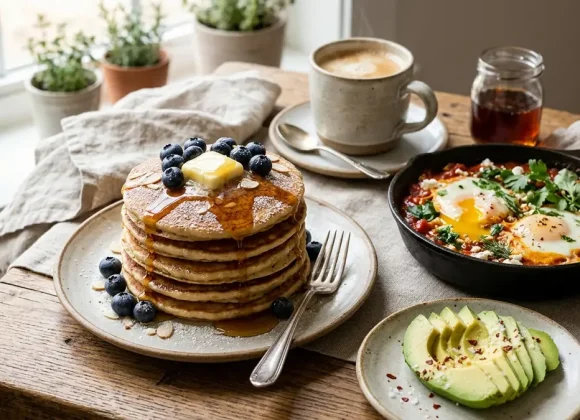
Once you whisk up a batch of this blend, test it immediately in our Easy Wheat-Free Gluten-Free Bread Recipe, our Best Gluten-Free Rye Bread Recipe, our Ultimate Moist One-Bowl Banana Bread, or our Best Fluffy Homemade Pancakes!
Master Recipe: 1-Kilogram (7-Cup) Homemade Wheat-Free Flour Blend
This master batch yields exactly 1,000 grams (approx. 7 cups) of flour—with each standard leveled cup weighing 140 grams, matching the exact weight of 1 cup of conventional all-purpose wheat flour!
- 400g Superfine Brown Rice Flour (about 2 ¾ cups): Provides neutral structure and whole-grain nutrition. (For ultra-white angel food cakes or sugar cookies, use 400g superfine white rice flour.)
- 200g Sweet White Sorghum Flour (about 1 ½ cups): Adds buttery flavor, protein, and softness. (Sub: 200g superfine millet flour or certified gluten-free oat flour.)
- 250g Tapioca Starch / Tapioca Flour (about 2 cups): Provides elasticity, chew, and golden crust caramelization. (Sub: 250g arrowroot starch.)
- 150g Potato Starch (about ¾ cup + 2 tablespoons): Locks in moisture and creates a lofty crumb. (Important: Use potato starch, NOT dehydrated potato flour!)
- Optional Binder (Leave Out for Storage, or Add 2 ½ teaspoons Xanthan Gum to the Whole Batch): See our binder guide below so you always add the exact right amount for each type of bake!
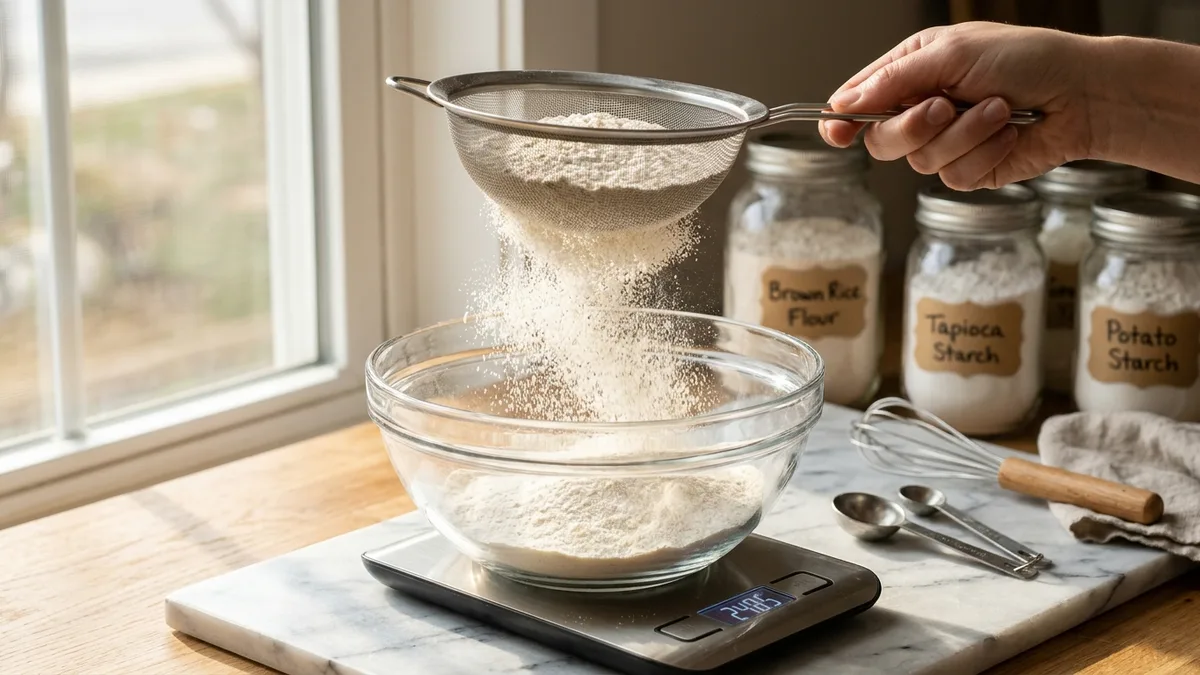
Step-by-Step Mixing & Sifting Instructions
Step 1: Weigh Every Ingredient on a Digital Scale
Place a large stainless-steel or glass mixing bowl on your digital kitchen scale and tare (zero) the reading. Weigh in the 400g superfine brown rice flour, tare the scale, add 200g sweet white sorghum flour, tare again, add 250g tapioca starch, and finally add 150g potato starch. Weighing takes less than two minutes, creates zero dirty measuring cups, and guarantees 100% batch-to-batch precision.
Step 2: Whisk and Sift Twice for Total Uniformity
Because potato starch and tapioca starch have a smaller particle size than rice and sorghum flours, simply stirring with a spoon can leave pockets of pure starch. Use a large balloon whisk to blend the flours vigorously for 90 seconds, then pass the entire mixture through a fine-mesh sieve into an airtight glass canister. Alternatively, transfer the weighed flours into a large 1-gallon zip-top bag or lidded bucket and shake for 60 seconds.
How Much Xanthan Gum or Psyllium Husk Should You Add Per Cup?
Why do professional bakers keep xanthan gum separate from their master flour jar? Because a delicate shortbread cookie needs only a fraction of the binder required for a tall cinnamon roll! Use this quick-reference chart whenever you bake with 1 cup (140g) of this homemade blend:
| Type of Recipe | Xanthan Gum (per 1 Cup / 140g Flour) | Alternative: Finely Ground Blonde Psyllium |
|---|---|---|
| Pancakes, Waffles & Crepes | None needed (or ⅛ teaspoon) | ½ teaspoon |
| Cakes, Cupcakes & Quick Breads | ¼ teaspoon | ¾ teaspoon |
| Cookies, Bars & Muffins | ½ teaspoon | 1 teaspoon |
| Pie Crusts, Biscuits & Scones | ¾ teaspoon | 1 ½ teaspoons |
| Yeasted Breads, Pizza & Cinnamon Rolls | 1 teaspoon (plus whole psyllium gel) | 1 tablespoon whole blonde psyllium husk |
3 Golden Rules for Baking with Gluten-Free Flour
- Always Give Your Batter a 15-Minute Rest Before Baking: Rice and sorghum flours absorb liquid more slowly than wheat flour. Letting your muffin, pancake, or cake batter sit on the counter for 15 minutes before sliding it into the oven allows the starch granules to hydrate fully, completely eliminating any grittiness!
- Add 1 Extra Tablespoon of Liquid if Batter Looks Too Thick: Because gluten-free starches soak up moisture, don’t be afraid to add an extra splash of milk or an extra egg white if converting a traditional wheat family recipe.
- Store Cool and Dark for Up to 6 Months: Because brown rice and sorghum flours contain nutritious whole-grain germ oils, store your glass jar in a cool, dark pantry for up to 4 months, or in the refrigerator/freezer for up to 1 year.
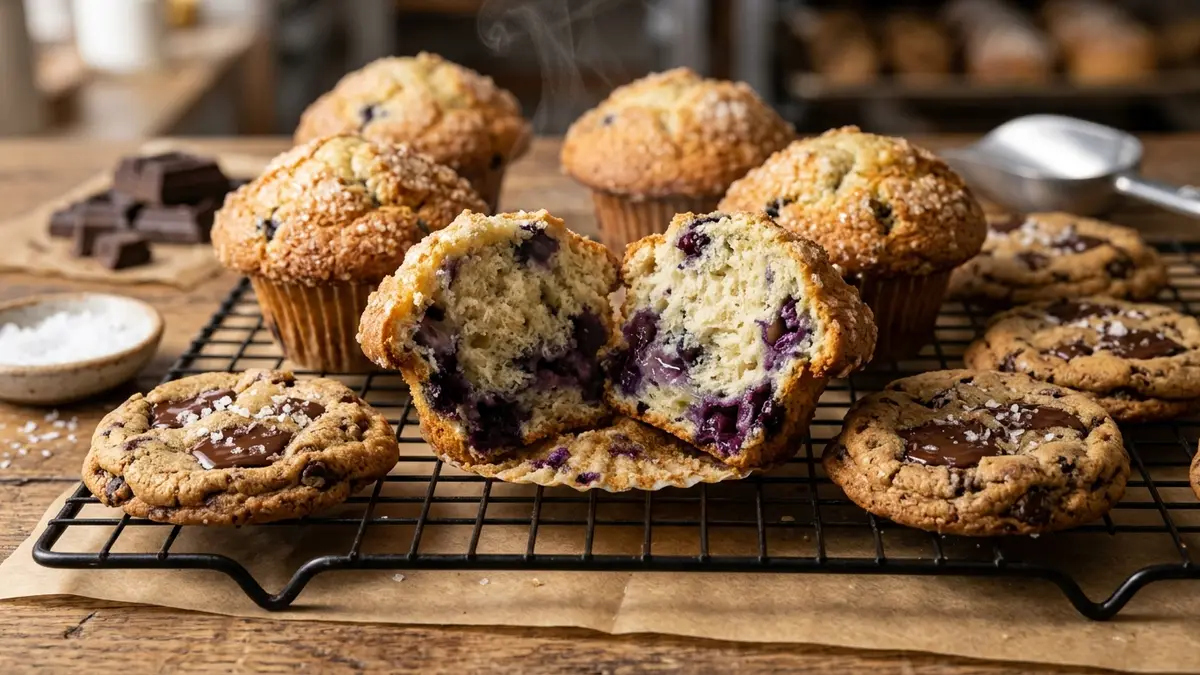
With a canister of this silky, balanced 4-ingredient wheat-free flour blend sitting on your counter, you are officially ready to turn any favorite family recipe into a golden, tender gluten-free masterpiece.