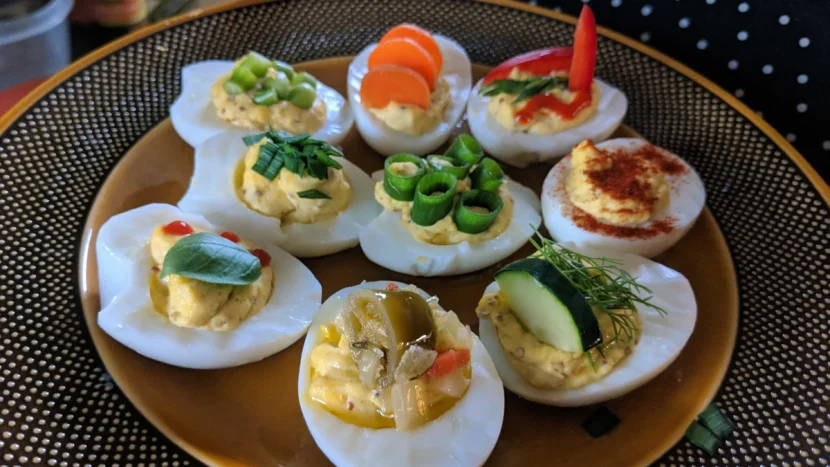
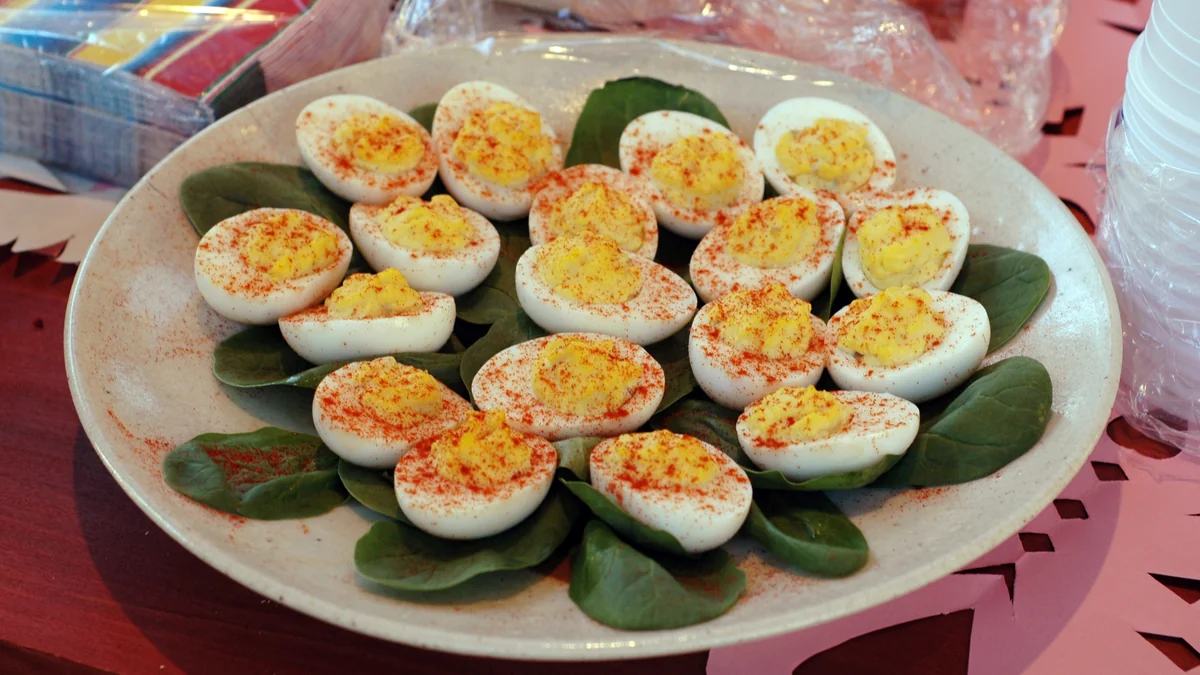
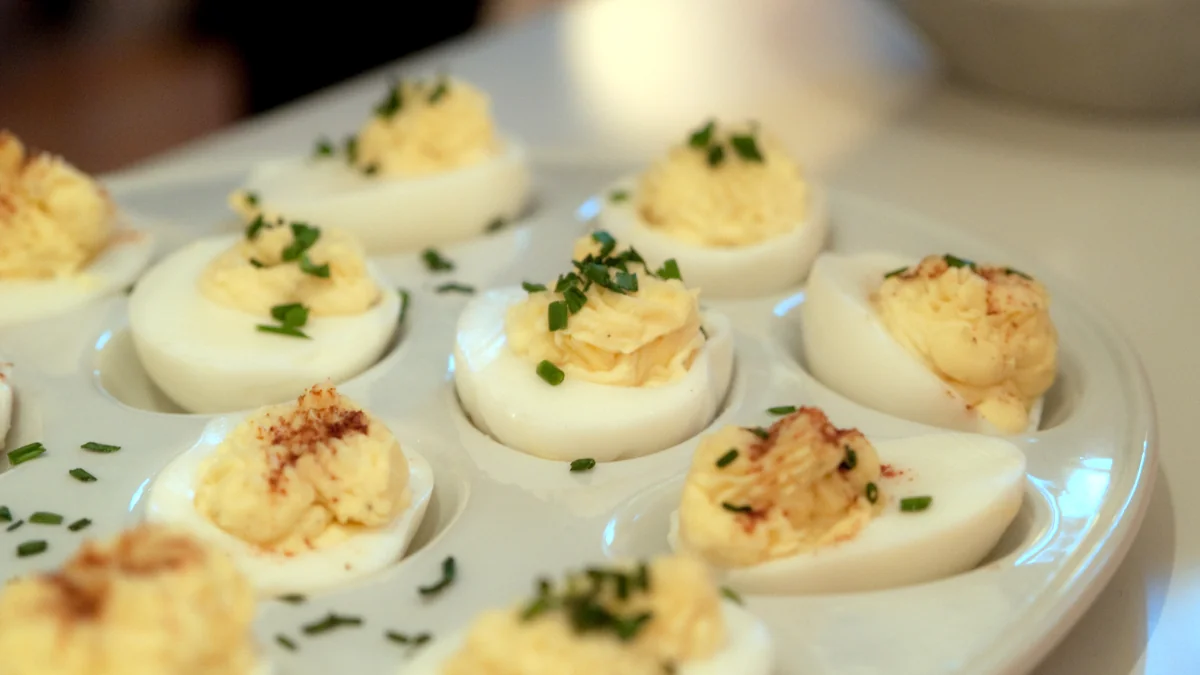
Whether you are hosting an elegant holiday dinner, organizing a summer backyard barbecue, or putting together a Sunday brunch spread, an antique platter piled high with golden deviled eggs is always the first dish to disappear. With their velvety, tangy piped yolks nestled inside tender egg whites and dusted with vibrant paprika, they remain an undisputed crown jewel of classic entertaining.
The term “deviling” dates back to 18th-century culinary literature, traditionally referring to dishes prepared with zesty mustard, piquant seasonings, or peppery heat. While countless modern variations feature everything from smoked salmon to sriracha, nothing rivals the comforting, timeless nostalgia of a traditional Southern-style preparation.
The Secrets to a Fail-Proof Classic Deviled Eggs Recipe
The hallmark of an unforgettable hors d’oeuvre is contrast: silk-smooth filling against firm, snappy whites. Yet all too often, homemade versions suffer from rubbery whites, greenish-gray yolks, or grainy, lumpy fillings. Achieving culinary perfection requires understanding egg protein chemistry and proper temperature control.
Essential Ingredients for a Traditional Deviled Eggs Recipe
Every element in this filling serves a distinct textural and flavor purpose. Skipping or substituting the wrong ingredient will throw off the delicate balance of fat, acid, and seasoning:
- Farm Eggs (Ideally 1–2 Weeks Old): Farm-fresh eggs are notoriously difficult to peel because their low internal pH causes the inner membrane to fuse stubbornly to the shell albumen. Eggs that have rested in the refrigerator for a week or two have lost moisture through their porous shells, allowing the internal air pocket to expand and the shell to slide off effortlessly.
- Full-Fat Mayonnaise: Mayonnaise is the primary emulsifier that converts dry, powdery yolks into a lush, pipeable cream. Duke’s or Hellmann’s is the traditional choice for classic Southern depth.
- Dijon & Yellow Mustard Blend: Dijon provides sophisticated sharpness and white wine acidity, while standard yellow mustard contributes that iconic sunshine hue and familiar picnic tang.
- Sweet Pickle Relish & Brine: A tablespoon of finely diced sweet relish delivers crunch and sweetness to balance the rich yolks. Stirring in a half-teaspoon of the pickle brine acts as the secret acidity booster.
- Smoked Paprika & Fresh Chives: A gentle dusting of Spanish smoked paprika provides earthiness without overwhelming heat, while finely snipped fresh chives add a pop of color and onion aroma.
Step-by-Step Method for Peeling and Piping
Follow these four simple steps to ensure clean peeling and restaurant-quality presentation every time.
1. The Hot-Start Boil and Ice Bath Shock
Never start hard-boiled eggs in cold water on the stove. Starting eggs in cold water causes the egg white proteins to slowly fuse to the inner membrane. Instead, bring a large pot of water to a rolling boil, gently lower the eggs into the water using a slotted spoon, reduce the heat to a steady simmer, and cook for exactly 11 minutes.
The moment the timer sounds, transfer the eggs immediately into an ice water bath (equal parts ice and cold water) for at least 15 minutes. This thermal shock rapidly contracts the egg inside the shell and halts the cooking process instantly, eliminating the unappetizing greenish-gray ferrous sulfide ring that forms around overcooked yolks.
2. The Fine-Mesh Sieve Technique
Peel the chilled eggs under a gentle stream of cool tap water, slice them cleanly in half lengthwise, and pop the yolks into a medium mixing bowl. For the silkiest filling imaginable, do not rely on a fork. Press the yolks through a fine-mesh wire sieve using the back of a silicone spatula. This breaks down every microscopic granule, creating an airy, velvet powder that blends seamlessly with the wet ingredients.
3. Emulsify the Filling
Whisk the sieved yolks with the mayonnaise, Dijon mustard, yellow mustard, sweet relish, pickle brine, a pinch of kosher salt, and freshly ground black pepper until completely glossy and homogenous. Taste the mixture and adjust seasoning as desired.
4. Pipe with a Star Tip
Transfer the yolk mixture into a disposable piping bag fitted with a medium open-star tip (such as a Wilton 1M). Hold the bag perpendicular to each egg white half and pipe with steady downward pressure, finishing with a graceful circular swirl. If you do not own a pastry bag, simply snip the corner off a heavy-duty zip-top freezer bag for a clean, rounded dollop.
Serving and Make-Ahead Entertaining Tips
Deviled eggs can easily be prepped ahead of time, making them a stress-free choice for holiday hosts:
- Prepare up to 24 hours in advance: Cook and peel the eggs, slice them, and pipe the filling into the whites. Arrange them tightly in a sealed egg keeper or on a platter wrapped gently in plastic wrap, ensuring the wrap does not touch the piped tips.
- Garnish right before serving: Dust with smoked paprika and scatter fresh chives just before carrying the platter to the table. Pre-dusting hours ahead can cause the paprika to bleed into the filling.
Planning a complete appetizer buffet? Pair these velvety bites with our crowd-pleasing, oven-baked Ultimate Buffalo Chicken Dip Recipe or our naturally smooth Authentic Silky Smooth Hummus Recipe. For weekday lunch inspiration using leftover hard-boiled eggs, check out our guide to The Best Classic Egg Salad Recipe.
Chill your platter, gather your guests, and watch these irresistible Southern favorites vanish in minutes!